
· 4 min read
Why Most "SEO Problems" Are Actually Web Development Problems
Most SEO problems are actually bad web development. See how custom code, sub-second speeds, and clean HTML build the ultimate ranking foundation.
By Marcus · Arkline Studio
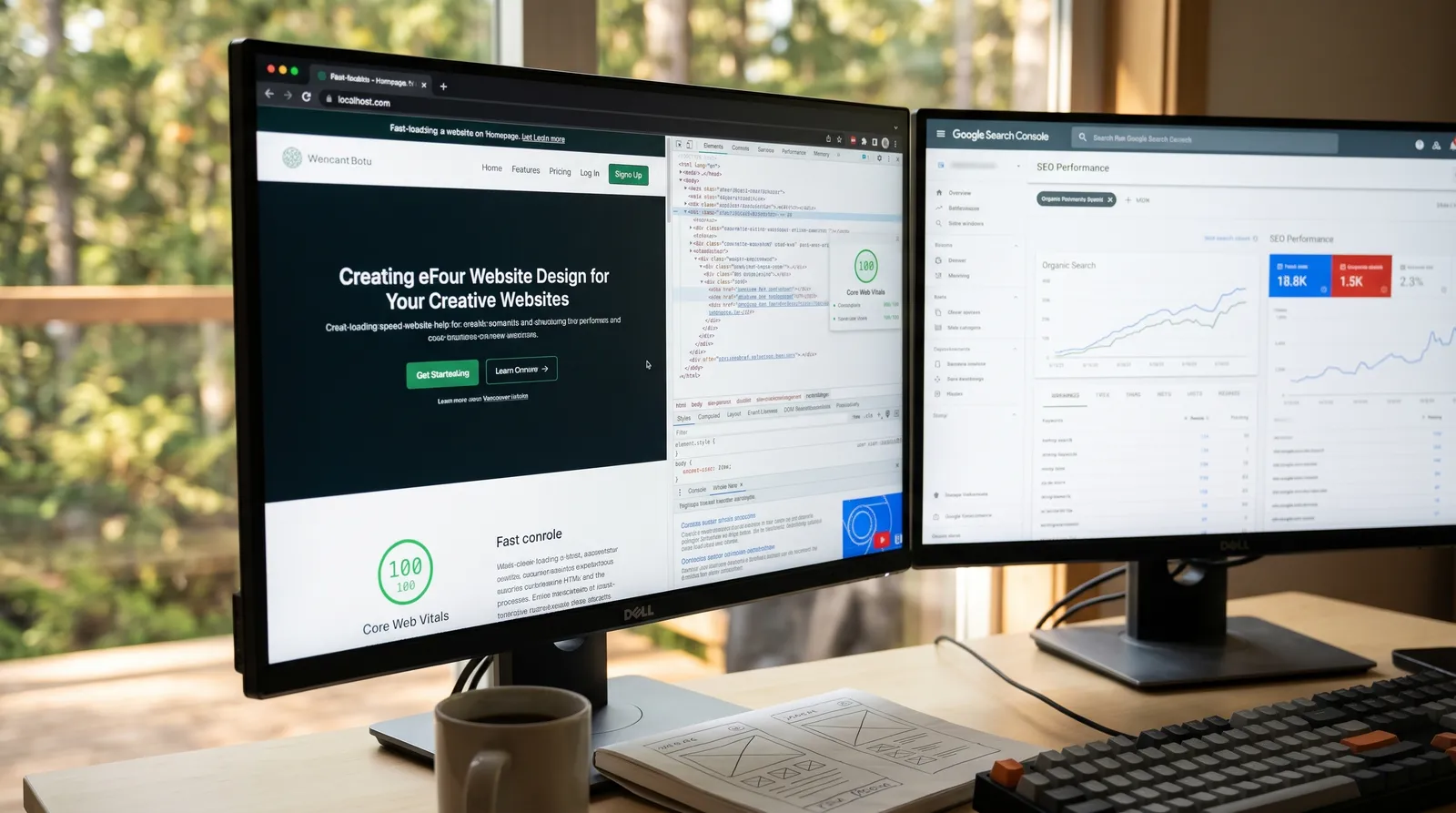
If you own a small business, trade company, or growing consumer brand, you have probably heard the standard SEO pitch: pay a monthly retainer, publish a few blog posts stuffed with keywords, and watch your website climb to the first page of Google.
Then six months go by, the invoices keep coming, and your website is still buried on page four.
The hard truth is that you cannot market your way out of a poorly built website. When a site struggles to rank in local search results—whether you are trying to reach customers across Vancouver Island or selling products nationwide—the bottleneck is rarely a lack of keywords. It is almost always the underlying code and architecture.
Here is why technical web development is the real foundation of modern SEO, and what separates a site that ranks from one that stalls.
1. Template Bloat Quietly Kills Your Core Web Vitals
Drag-and-drop website builders and off-the-shelf themes are designed to do everything for everyone. To achieve that flexibility, they load massive amounts of unused CSS, third-party tracking scripts, and heavy JavaScript bundles on every single page load.
Google measures real-world user experience through Core Web Vitals—specifically how fast your main content renders (Largest Contentful Paint) and how quickly the page responds to user interaction.
- Bloated Templates: Often ship megabytes of unnecessary code before a visitor even sees your headline, pushing mobile load times past 4 or 5 seconds.
- Custom-Built Websites: Serve clean, lightweight markup and optimized assets, routinely delivering sub-second load times on cellular connections.
Search engines prioritize fast sites because users abandon slow ones. When your site loads in under a second, bounce rates drop, engagement rises, and Google takes notice.
2. Clean Semantic HTML Helps Search Engines (and AI) Understand Your Business
Modern search is no longer just a list of ten blue links. Between traditional Google rankings and AI-driven answer engines, crawlers rely heavily on the structural clarity of your code to figure out what your business actually does and where you operate.
Many visual page builders wrap simple text in dozens of nested, meaningless <div> tags, use improper heading hierarchies (like multiple <h1> tags or skipping straight to <h4>), and hide critical service descriptions inside heavy client-side scripts.
Hand-crafted web development uses clean semantic HTML and structured JSON-LD Schema Markup. That means search crawlers immediately see:
- Who you are and what specific services you offer
- Which cities and regions you serve (such as Courtenay, Comox, Nanaimo, or Victoria)
- Verified customer reviews, project galleries, and clear contact pathways
3. Mobile-First Architecture Isn’t Optional
Over 60% of local service searches—especially in construction, trades, and retail—happen on a smartphone. Yet many business websites are still designed on a wide desktop monitor and crudely shrunk down for smaller screens as an afterthought.
If a visitor lands on your site from their phone and has to pinch-to-zoom, wait for oversized images to load, or hunt through a broken menu just to find your phone number, they hit the back button within seconds. Search engines track that behavior ("pogo-sticking") as a strong signal that your page didn't satisfy the search, pushing your rankings down.
4. Dedicated Service and Location Structure
A common mistake on small business websites is cramming every service onto a single generic "Services" page.
If you are a contractor offering custom home builds, renovations, and commercial framing across multiple communities, a single catch-all page struggles to rank for any specific search. A well-architected website gives each core service and regional market its own fast, focused landing page with clear internal linking, real project photos, and straightforward calls to action.
Fix the Foundation Before Paying for Traffic
Before spending money on ongoing SEO retainers or paid ads, make sure the website you are sending traffic to is actually built to convert and rank. A clean, fast, custom-built site continues paying dividends long after launch without requiring constant plugin patches or workarounds.
See What Your Business Looks Like With a Custom Build—Zero Risk
At Arkline Studio, we build high-performance, hand-crafted websites for businesses that want speed, clarity, and real client inquiries—without the bloat of cookie-cutter templates.
We make getting started completely risk-free:
- Tell us about your business: Fill out a short, one-minute form—no pushy sales calls or lengthy questionnaires.
- We build your draft: Within two weeks, we design and build a real, working website draft tailored to your brand.
- Keep it or walk away: Love it? Pay to make it live on your domain. Not for you? Walk away without paying a single cent.